
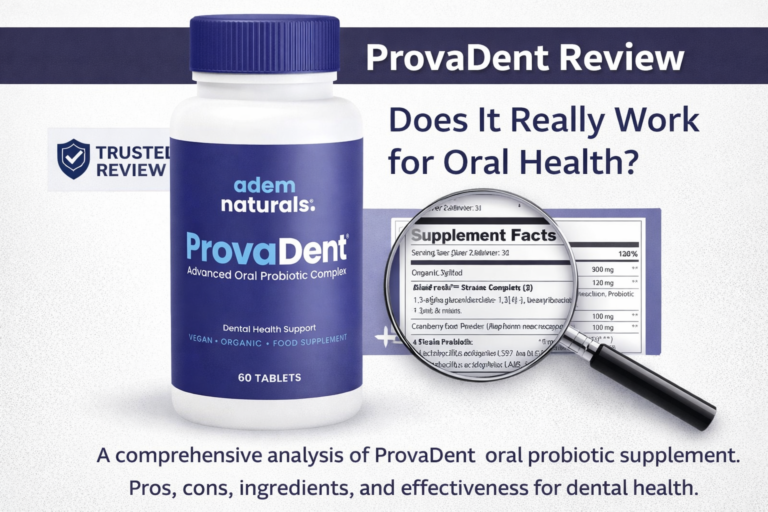
Curious whether real people saw a difference after eight weeks of daily use? I dug into user feedback and observational data to give you a clear, practical update for 2026.
I explain what this update covers: breath, gums, plaque feel, sensitivity, refunds, and safety. I also say up front what I will not promise—no enamel regrowth miracles.
I use customer reports to spot repeatable patterns, not single testimonials. The trends I find point to three big themes: authenticity of sellers, consistent daily use, and realistic timelines measured in weeks.
Where observational data exists, I treat it as directional evidence. That 8-week evaluation showed modest average shifts in plaque, gingival index, bleeding-on-brushing, and breath scores. I’ll help U.S. readers know what to watch for and when to ask a dentist rather than rely on a supplement.
Key Takeaways
- I summarize patterns across many users, not isolated quotes.
- Expect changes on a weekly timeline, not instant results.
- Watch for authenticity—marketplace sellers may pose counterfeit risk.
- Observed improvements were modest but directionally positive.
- If problems persist, consult a dental professional promptly.
Want to try Provadent the safe way? Use the official source so you can check seals, lot codes, and refund terms.
Check Official Provadent Availability & Refund Terms →Tip: Avoid third-party listings to reduce counterfeit risk and customer-service headaches.
What I Set Out to Learn From Provadent Reviews and Complaints in 2026
I dove into verified purchases to see which reported changes hold up over time.
Why verified buyer patterns matter: I focus on confirmed orders because many negative reports trace to unauthorized sellers and suspected imitations. Verified sales show more consistent trends and make it easier to link effects to the product itself rather than a counterfeit or shipping issue.
How I separated issues: I split consumer feedback into two buckets — product effects and buying experience. Shipping, billing, or fake-bottle notes go in the latter. Genuine product complaints about taste, mild irritation, or no change sit in the former.
What “good results” realistically mean: modest improvements in bleeding on brushing, steadier gum comfort, better breath stability, and slightly less plaque adhesiveness. I set a realistic bar: enamel regrowth in days is unlikely.
I also treated neutral experiences as useful data. If many users report no major change, that helps define realistic expectations and where the supplement fits in everyday oral health routines.
Quick Product Snapshot: What Provadent Claims to Do for Breath, Gums, and Enamel
I reviewed the manufacturer’s claims and translated them into practical expectations. In plain terms, this is a daily probiotic-style supplement designed to help create a healthier mouth environment over time.
Core headline benefits usually repeat across marketing: fresher breath, gentler gum comfort, reduced plaque stickiness, and an enamel-friendly mouth pH rather than true enamel rebuilding.
- Breath freshness: aimed at lowering odor-causing compounds.
- Gum comfort: positioned to reduce tenderness and bleeding frequency.
- Plaque control: claims center on making biofilm less adhesive via the BioFresh™ Clean Complex.
- Enamel support: xylitol is highlighted to favor an enamel-friendly pH, not enamel regeneration.
Where it fits in a daily oral care routine
This formula is meant as an adjunct after brushing, flossing, and tongue cleaning. If it dissolves in the mouth, dwell time matters—let it melt rather than chew and swallow immediately.
Many users and hygienists judge changes during routine cleanings and by everyday signals like morning breath. These claims rest on shifting the oral microbiome balance rather than wiping out microbes with antiseptics.
| Claim | What to expect | How to assess |
|---|---|---|
| Breath freshness | Reduced short-term odors via VSC reduction | Self-rated morning breath scores over weeks |
| Gum comfort | Less bleeding/tenderness with consistent use | Bleeding-on-brushing frequency at dental visits |
| Enamel-friendly pH | Supports remineralization environment, not enamel regrowth | Saliva pH trends and sensitivity reports |
| Plaque stickiness | Biofilm may feel less adhesive between cleanings | Hygienist notes and plaque-disclosing tablet checks |
Why Oral Microbiome Balance Is the Big Idea Behind This Supplement
I start by framing the mouth as a living ecosystem where tiny shifts change breath and gum health. The term microbiome simply means the community of microbes that live on your teeth, tongue, and gums.
How plaque biofilm and inflammation connect
When plaque biofilm matures, it can irritate gum tissue and trigger inflammation. That inflammation often shows up as tenderness or bleeding during brushing.
Short-term chlorhexidine: useful, not perfect
Chlorhexidine rinses reduce plaque and gingival inflammation quickly. But longer use can cause staining, altered taste, mucosal irritation, and more calculus. Dentists use it as a short, directed tool rather than a daily long-term fix.
How oral probiotics may act differently
- Competitive exclusion: beneficial strains crowd out odor- and acid-producing species.
- VSC reduction: lowering volatile sulfur compounds helps with halitosis, often driven by tongue-dorsum bacteria.
- Immune modulation: local immune effects are proposed, but I treat broad systemic claims cautiously.
“Shifting biofilm composition can change how plaque behaves and how gums respond.”
How Provadent Works, According to Ingredient and Mechanism Breakdowns
Here I translate the ingredient list into practical, mechanism-focused explanations so you can see what the formula tries to do in the mouth.
The probiotic concept: supporting good strains, not wiping everything out
Probiotics in this mix aim to add helpful microbes rather than act like an antiseptic. That means changes tend to show over weeks as new communities settle in.
BioFresh™ Clean Complex: breaking down biofilm
Biofilm-targeting enzymes are meant to loosen sticky layers so brushing removes plaque more easily. Think of it as weakening the glue between bacteria and tooth surfaces.
Xylitol: acidity and enamel-friendly pH
Xylitol is included to reduce bacterial fermentation of sugar. That helps keep saliva and pH more enamel-friendly over time.
Cranberry compounds and plaque adhesion
Proanthocyanidin-rich cranberry compounds may reduce how strongly plaque sticks. The likely user outcome is “less sticky” buildup between cleanings.
Purple carrot antioxidants for gum tissue support
Anthocyanins add antioxidant support that may help gum health, but this is supportive rather than regenerative.
| Ingredient | Intended mechanism | User-facing effect |
|---|---|---|
| Oral probiotic strains | Colonize niche, compete with pathogens | Gradual breath and gum shifts |
| BioFresh™ Clean Complex | Enzymes weaken biofilm matrix | Plaque feels less adhesive |
| Xylitol | Limits sugar fermentation, stabilizes pH | Enamel-friendly saliva environment |
| Cranberry proanthocyanidins | Reduce bacterial adhesion | Less sticky plaque |
Key limitation: incomplete public strain disclosure and unclear CFU-at-expiry data make it hard to map specific research to the shown formula.
If you’re going to test Provadent, give it a fair window (2–4 weeks minimum). Start with the official listing so you know what you’re getting.
View Official Provadent Offer →You can compare bundles, see current pricing, and confirm the written guarantee.
What Real Users Report: The Most Common Benefits Mentioned in Reviews

My review of user feedback finds a few consistent wins people report first. Most notes focus on breath, gum comfort, plaque feel, and occasional sensitivity shifts.
Breath freshness and the “morning breath” problem
Breath freshness often shows up fastest. Many users tell me they notice better morning breath by weeks 2–4. This was the most common early benefit in the observational logs.
Gum comfort: tenderness, swelling, and bleeding
Gum comfort improvements followed. Reports match the data direction: bleeding episodes fell from about 3.1 to 1.8 per week in the study group. Users describe less tenderness during brushing.
Plaque feel and “less sticky” buildup
People rarely say “no plaque.” Instead, they report plaque feels less sticky and cleans off more easily. The observational plaque score dropped by roughly 17% on average.
Tooth sensitivity and secondary notes
Some users reported lower sensitivity around weeks 6–8. I treat this as a possible secondary change, since many factors affect sensitivity.
Several users mentioned mild digestive tweaks early on. These notes are occasional and not primary mouth outcomes.
| Reported Effect | Timing | User-facing change |
|---|---|---|
| Freshness | 2–4 weeks | Better morning breath |
| Bleeding | 2–8 weeks | Fewer bleeding episodes/week |
| Plaque feel | 2–6 weeks | Less sticky buildup |
| Sensitivity | 6–8 weeks | Occasional reduction in sensitivity |
Results Timeline: What People Notice in Days, Weeks, and Around Day 90
I mapped a practical timeline so you can see which changes tend to pop up first and which take longer to settle. This helps set realistic expectations about short-term signals versus longer-term shifts.
The first week
Early signals often appear within 5–7 days. Many users report fresher breath, less oral dryness, and a subtle “clean mouth” feeling. These early effects are usually the clearest signs in the first days.
Weeks two to four
Between weeks 2–4, gum comfort and bleeding-on-brushing often begin to improve. Plaque may feel less sticky. These changes match observational trend lines seen in user logs.
Weeks six to eight
By weeks 6–8 many people reach a plateau. Results tend to stabilize as the oral community settles into a new steady state. Users describe steady benefits rather than ongoing big shifts.
Day 60–90
Around days 60–90 “stabilization” reflects sustained competition among microbes, habit consistency, and reduced tongue coating. Missed doses can make freshness fade faster; intermittent use explains many reports that benefits stopped.
What the 8-Week Observational Evaluation Suggests About Provadent’s Real-World Effects
I reviewed the eight-week observational logs to see which changes held up under everyday conditions. The study tracked 38 completers who bought from the official storefront and recorded lot codes and seals.
Plaque change: what “modest improvement” looks like
Mean plaque scores moved from 1.82 to 1.50 (≈−17%). That is a measurable shift but not a replacement for brushing and professional cleanings.
Gingival and bleeding trends
Gingival Index fell from 1.49 to 1.19 (≈−20%). Weekly bleeding episodes dropped by about 1.3 events (3.1→1.8). For many users this felt like a real quality-of-life improvement.
Breath scoring: trained raters vs. self-ratings
Organoleptic scores improved 2.6→2.0 while breath satisfaction rose 2.8→3.7. Both measures moved together, which strengthens the observed results.
Who responded best and main limits
About one-third of participants responded most: those with higher baseline inflammation, daily tongue cleaning, and consistent interdental care. The evaluation offers useful research but has limits—no placebo arm and incomplete public strain disclosure. That raises a practical risk of expectancy effects and makes it harder to map outcomes to specific strains.
| Metric | Baseline | Week 8 |
|---|---|---|
| Plaque score | 1.82 | 1.50 |
| Gingival Index | 1.49 | 1.19 |
| Bleeding/wk | 3.1 | 1.8 |
Bottom line: the small, consistent improvements seen here are promising, but treat these results as directional and weigh the risk that causality isn’t proven without randomized trials.
Provadent Reviews and Complaints: What Negative Feedback Really Centers On
Negative feedback clusters into a few clear themes that point to where problems actually begin.
Counterfeit and unauthorized sellers: investigative sources show most poor reports come from non-official marketplaces. I found that imitation bottles often have degraded probiotics, wrong ingredient mixes, or poor storage. That creates a high risk of bad outcomes that are not the manufacturer’s fault.
Unrealistic expectations
Quick fixes like “enamel regrowth in days” crop up a lot. Enamel support works by shifting the mouth environment slowly. Expect weeks, not magic overnight repair.
Inconsistent use
Reports saying “it stopped working” often follow missed doses or irregular routines. The product needs steady use during the colonization window to show results.
Logistics and service issues
Many complaints are about shipping, billing, or returns. Slow delivery, unclear refund steps, or unexpected charges irritate buyers even when the product is fine.
How I vet a complaint
- Confirm purchase source: official site vs marketplace.
- Check lot number and expiration on arrival.
- Verify consistent use duration before judging effect.
- Ask if the issue is product-related or logistics-related.
| Complaint Type | Common Cause | How I Verify |
|---|---|---|
| Product-effect issues | Irregular use or unrealistic expectations | Confirm dosing history and timeline |
| Authenticity concerns | Unauthorized sellers, counterfeit bottles | Compare lot/expiry to manufacturer’s records |
| Logistics complaints | Shipping delays, billing errors, return confusion | Review order receipt and refund policy |
Bottom line: treat negative reports with a fact-check: verify source, check lot codes, confirm consistent use, and weigh timing against real oral biology.
Side Effects and Safety: What I Found in Customer Reports and Observational Logs
I cataloged short-term tolerability notes from the observational group to give a practical safety picture. Overall, reported problems were few and mostly mild.
Mild GI adjustment in week one or two
About 10% of participants noted mild GI changes in the first one to two weeks. Typical reports were bloating or softer stools that resolved without treatment.
Oral tolerance, taste, and sensitivity notes
Oral tolerability was generally good. Taste or mouthfeel leaned neutral-to-minty in most logs. No persistent mucosal irritation was recorded.
One person reported transient increased sensitivity in week one. I mention this because sensitivity is multi-factorial; monitor it rather than panic.
Who should be cautious
If you are immune-compromised, have prosthetic heart valves or a history of endocarditis, recently had major oral surgery, or are pregnant/lactating without clinician advice, take extra caution. These groups are listed conservatively in the safety notes.
When to stop and call a clinician
Stop use and seek help for worsening gum swelling, fever, severe pain, suspected abscess, rash or allergic reactions, or persistent GI distress. Supplements do not replace diagnosis for advanced periodontal disease or active decay.
| Issue | Frequency | User outcome |
|---|---|---|
| Mild GI symptoms | ≈10% (week 1–2) | Resolved without treatment |
| Oral irritation / taste change | Occasional | Neutral-to-minty, no lasting mucosal injury |
| Transient sensitivity | Rare (single report) | Short-lived; monitor if persistent |
Note: If unusual symptoms persist, stop use and consult a dentist or physician promptly.
Authenticity Matters: How to Avoid Fake Provadent and Protect Your Health
Avoiding fakes isn’t just about value; it’s about whether the product can do its intended job for your mouth. I found investigative reporting and the observational logs point to a clear pattern: verified purchases from the manufacturer showed better outcomes than units bought on third-party listings.
Why verified orders trend better
Verified orders were tracked for lot codes, seals, and desiccants. When those checks passed, viability and ingredient accuracy were more reliable. That lowers the practical risk that a batch lost potency or had wrong components.
What to check when your package arrives
- Intact outer seal and inner safety seal.
- Readable lot code and clear expiration date.
- Presence of a desiccant packet to control moisture.
Where counterfeit risk is highest and what to do
Most problems show up on unauthorized marketplaces where pricing looks unusually low. If packaging is mismatched, codes are missing, or the product smells or tastes odd, don’t use it.
“If viability or ingredients are off, the entire mechanism can fail and safety uncertainty rises.”
Document the issue, contact customer support for verification, and request a refund or replacement. Protecting your health matters more than chasing a bargain on an unknown listing.
| Check | Why it matters | Action |
|---|---|---|
| Outer & inner seals | Shows untampered supply chain | Keep photos and contact support |
| Lot code / expiry | Confirms batch and freshness | Verify with manufacturer |
| Desiccant | Protects probiotic stability | Report if missing |
Counterfeit risk is where most bad experiences start. If you decide to buy, use the official source to protect your health and your refund rights.
Get Provadent From the Official Source →Look for seals, lot code, expiration date, and desiccant on arrival.
How I’d Use Provadent for Best Odds of Results
To get the best chance of a meaningful change, I’ll show how I’d pair the product with everyday oral care steps. Small timing choices and steady habits make the difference during the colonization window.
Timing with brushing, flossing, and tongue cleaning
My stack: brush with fluoride toothpaste, clean between teeth, then gently clean the tongue. After that, let the tablet dissolve slowly so it has time in the mouth.
Consistency tips for the colonization window
Make it stick: pair the step with an existing evening routine, set phone reminders, and avoid skipping stretches of days. Missed doses reduce breath-related benefits and slow colonization.
Simple tracking I’d use
Keep it low-effort. I rate morning breath 1–5, log bleeding episodes per week, and use a plaque-disclosing tablet once every two weeks to spot trends.
| Action | Why it matters | How I track |
|---|---|---|
| Slow dissolution after tongue cleaning | Maximizes oral contact time | 1–5 breath rating each morning |
| Daily consistency (evening anchor) | Supports colonization over weeks | Calendar checkmarks; avoid gaps |
| Occasional plaque check | Shows biofilm change | Disclosing tablet photo every 2 weeks |
Practical test window: give it at least 2–4 weeks before judging; a couple of days is not enough.
Who Seems Best Suited — and Who Probably Isn’t
I looked for clear patterns that show who actually saw steady mouth improvements over weeks.
Best-fit users are people with mild gum inflammation, a noticeable tongue coating, or routine-building habits. These users reported better breath and less bleeding when they stuck to a daily habit and kept tongue cleaning consistent.
Why intraoral halitosis matters: when bad odor comes from the mouth (volatile sulfur compounds on the tongue or in periodontal niches), shifting the oral community can help. That gives a clearer path to measurable breath change and modest gum gains.
Who may be underwhelmed: if your smell source is extra-oral — sinus infection, reflux, or tonsil stones — mouth-focused tools have limited effect. Also, advanced periodontal disease with deep pockets, loose teeth, or heavy recession needs professional care first, not a supplement experiment.
- Benefit pattern: intermittent bleeding, morning breath, and consistent routine predict better outcomes.
- Less likely to help: extra-oral odor, advanced periodontal issues, or inconsistent use.
- Quality of life: even small drops in bleeding or malodor can reduce social stress and improve daily life.
| User profile | Likely result | Why |
|---|---|---|
| Mild gingivitis, regular tongue cleaning | Modest gum comfort & fresher breath | Microbiome shifts target intraoral sources |
| Routine-builders who use nightly | More consistent benefits over 4–8 weeks | Steady dosing supports colonization |
| Extra-oral odor or advanced periodontal disease | Underwhelmed or no change | Source lies outside the mouth or needs dental treatment |
Bottom line: think in terms of incremental support. If you want meaningful, realistic gains in oral health and breath that improve life daily, match the tool to the problem and keep expectations measured.
If your main goal is morning breath + mild gum bleeding, Provadent may be worth a measured trial alongside brushing, flossing, and tongue cleaning.
See If Provadent Fits Your Goals →Not for severe pain, infection signs, or advanced periodontal disease—see a dentist first.
How Provadent Compares to Alternatives I’d Consider for Oral Health Support
My goal here was practical: show which choices map best to breath, gum inflammation, or enamel support. I weighed single-strain products, targeted probiotic options, and classic non-probiotic tools so you can pick by your main goal.
Strain-disclosed lozenges: S. salivarius K12/M18 for breath
Why strain disclosure matters: S. salivarius K12 and M18 have specific trial data for halitosis control. If you want a clear link to published results, choose lozenges that list the exact strains. Those products let you map outcomes to studies rather than guess from a blend.
L. reuteri oral strains for gum support
Limosilactobacillus reuteri strains are the ones most often studied for gingival inflammation. They are usually recommended as an adjunct to brushing and flossing, not a replacement for dental care. If your priority is lowering bleeding and inflammation, strain-disclosed products offer clearer evidence.
Non-probiotic options: xylitol, hydroxyapatite toothpaste, fluoride basics
Xylitol gum and lozenges help saliva flow and stabilize pH, which supports enamel health. Hydroxyapatite toothpaste can reduce sensitivity and aid enamel repair at the surface level.
Fluoride remains the backbone for cavity prevention. These non-probiotic tools are simple, evidence-backed ways to move the needle on daily enamel protection and sensitivity.
Chlorhexidine rinse: short-term reset, not a daily fix
Chlorhexidine is effective for short-term gingivitis control but can cause staining, altered taste, mucosal irritation, and increased calculus with long use. I view it as a dentist-directed reset for flare-ups, not a forever rinse.
My take: the all-in-one blend appeals if you want convenience. If you want precise, trial-backed effects, choose strain-disclosed products for breath or L. reuteri for gum inflammation.
| Option | Best for | Key advantage | Main drawback |
|---|---|---|---|
| Strain-disclosed S. salivarius K12/M18 | Halitosis (breath) | Direct trial linkage to outcomes | Single-target, may need daily use |
| L. reuteri oral strains | Gum inflammation support | Studied for reduced bleeding/inflammation | Adjunct to mechanical care, not standalone |
| Xylitol / hydroxyapatite / fluoride | Saliva, enamel, sensitivity | Well-established, non-probiotic benefits | Requires consistent daily use |
| Chlorhexidine rinse | Short-term gingivitis control | Fast plaque and inflammation reduction | Not suitable long-term: staining & taste change |
Price, Refund, and Guarantee: What to Know Before You Buy
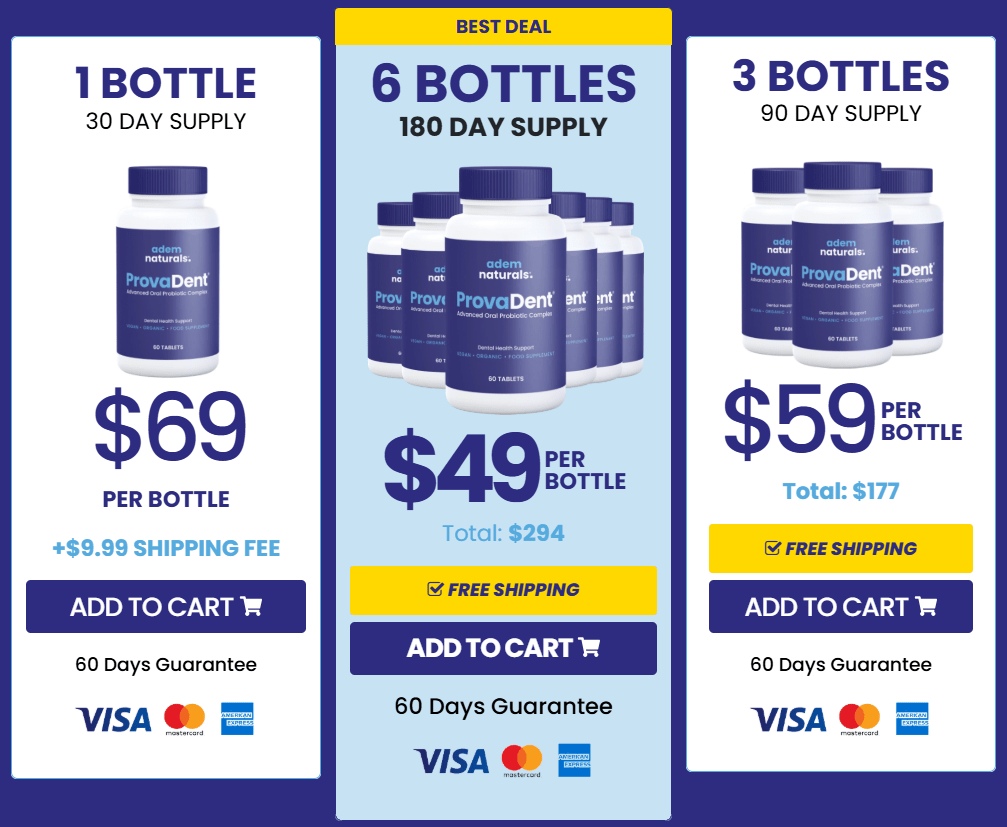
Before you hit buy, it helps to weigh cost, trial length, and return terms so money and time are protected. This product sits in a premium, direct-to-consumer tier, so the mix of single-bottle pricing and multi-bottle discounts matters.
Why multi-bottle pricing changes the value equation
My experience: oral-ecology supplements usually need weeks to show effects. That makes a single bottle an unfair trial for most people.
Multi-bottle bundles lower per-unit cost and cover a realistic 60–90 day window. But bundles raise upfront spend, so balance value against your tolerance and budget.
Refund window details to confirm before ordering
Confirm the written refund steps with the manufacturer before purchase.
- Ask for the exact refund window length in writing and whether returns are required.
- Check who pays shipping for returns and if restocking fees apply.
- Find out how long processing takes and whether refunds credit the original payment method.
Rule I use: don’t buy a multi-month supply until you know you tolerate it for a few days without GI issues.
| Purchase choice | What to confirm | Why it matters |
|---|---|---|
| Single bottle | Exact refund period, processing time | Low cost to test; limited time may not show full benefit |
| Multi-bottle bundle | Guarantee length, return rules, restocking fees | Better value for a realistic 60–90 day course, higher upfront spend |
| Subscription | Cancellation terms, manufacturer contact, refund policy | Convenience with ongoing shipments; check how easy it is to stop |
Most oral-ecology supplements aren’t a “one-week” test. If you’re comparing options, check the official bundles and calculate cost per day over 60–90 days.
Compare Provadent Pricing & Bundle Options →Confirm refund steps, return requirements, and who pays return shipping before ordering.
My Take on the Manufacturer, Transparency, and What I’d Like to See Improved
Transparency is the clearest credibility test for any oral probiotic, and I judged this manufacturer against that standard.
I asked customer support for strain-level details and CFU-at-expiry. Their replies were incomplete. For a product that acts by live microbes, that gap matters to consumers storing bottles in real kitchens and bathrooms.
Strain-level disclosure and CFU at end of shelf life
Why it matters: names and per-serving counts tell you what to expect. CFU-at-expiry tells you what remains after shipping and typical storage.
Third-party testing and clearer labeling for allergens and excipients
- Clear wins: publish a simple COA showing viability and contaminants.
- List excipients and common allergens prominently on the label.
- State per-serving counts and lot-level test links for consumer verification.
Why dentist-led formulation helps—but doesn’t replace independent verification
Clinical input improves the formula, but credentials don’t substitute for third-party testing or open strain disclosure. If transparency is your priority, look for strain-disclosed alternatives; if convenience matters more, weigh that against the disclosure gap.
Bottom line: strain names, CFU-at-expiry, and a public COA would raise confidence and let consumers make informed choices.
Conclusion
My final takeaway is practical: modest benefits are the most consistent outcome. When steady use meets authentic sourcing, people often see gradual breath stability and milder gum inflammation over weeks.
Who this helps: routine-builders with intraoral halitosis patterns or mild gingivitis tend to get the best results. The effects are gradual, so give it time and keep daily habits steady.
Who should skip or see a dentist: anyone with severe pain, signs of infection, advanced periodontal disease, or extra-oral odor sources. For safety, expect mild early GI adjustment in a minority of users.
Action plan: keep brushing, flossing, and tongue cleaning; track simple metrics for 4–8 weeks; buy from verified sellers and confirm refund terms before purchase. Reassess based on measurable change and comfort.
Want to try Provadent the safe way? Use the official source so you can check seals, lot codes, and refund terms.
Check Official Provadent Availability & Refund Terms →Tip: Avoid third-party listings to reduce counterfeit risk and customer-service headaches.
FAQ
What should I expect to notice first when I start using this oral probiotic?
How long before I might see reductions in gum bleeding or inflammation?
Are there common side effects I should watch for?
Can this product regrow enamel or reverse cavities?
How should I incorporate the supplement into my daily oral care routine?
What happens if I miss a few days—does it stop working?
How can I tell if a bottle is authentic and safe to use?
Are there interactions with other dental products like fluoride toothpaste or xylitol gum?
Who tends to benefit most from this type of oral probiotic?
What should I do if I experience persistent oral irritation or worsening symptoms?
How do I track whether the product is working for me?
Is there evidence this supports overall immune or digestive health?
What refund or guarantee issues should I check before buying?
Are strain disclosures and third‑party testing important?
What are common customer service or shipping complaints to be aware of?
Can children or pregnant people use this supplement safely?
If I want alternatives, what else should I consider for breath and gum support?
If you want to try Provadent, keep expectations realistic: look for incremental changes in breath stability and gum comfort over weeks.
Affiliate note: If you use my link, I may earn a commission at no extra cost to you.